
Building Confidence at the Pardo Gold Project

How bulk sampling, grade-control drilling, and large-core drilling are helping Inventus reduce uncertainty ahead of its planned maiden resource estimate.
The Investor Perspective
When investors review drill results, attention naturally turns to grades and new discoveries. High-grade intersections and expanding mineralization often generate the most excitement, but before a resource estimate can be completed, there is another equally important objective:
Building confidence in the data.
A resource estimate is only as reliable as the information used to create it. As a result, successful project advancement involves more than expanding mineralization, it requires building confidence in how that mineralization is distributed throughout the deposit and ensuring that sampling accurately represents the system as a whole.
At the Pardo Gold Project, this focus on confidence is helping guide Inventus' approach to drilling, sampling, and project development.
Understanding Uncertainty in Gold Bearing Conglomerates
The Pardo Project is a conglomerate-hosted gold system within the Huronian Supergroup, a 2.4-billion-year-old sedimentary basin. Conglomerates are ancient sedimentary rocks made up of rounded pebbles, cobbles, and gravel-sized fragments that were originally deposited by flowing water and later cemented together over geological time.
At Pardo, gold occurs within specific conglomerate layers that formed in ancient river and shoreline environments. As these systems developed billions of years ago, flowing water naturally sorted and concentrated dense gold particles alongside other sediments. Similar to modern placer deposits found in riverbeds today, this process did not distribute gold evenly throughout the rock. Instead, gold became concentrated in certain areas of the conglomerate horizon, creating zones of higher and lower mineralization.

This natural variability can create challenges when estimating grade and continuity across a large mineralized system. A single drill hole or sample may encounter a concentrated pocket of gold and return a high-grade result, while another sample taken nearby may return a much lower grade. Neither result is necessarily incorrect; rather, both reflect the inherent variability of the deposit.
Geologists often refer to this phenomenon as the nugget effect.
For companies like Inventus advancing toward a resource estimate, reducing this uncertainty is a key objective.
A Data-Driven Approach
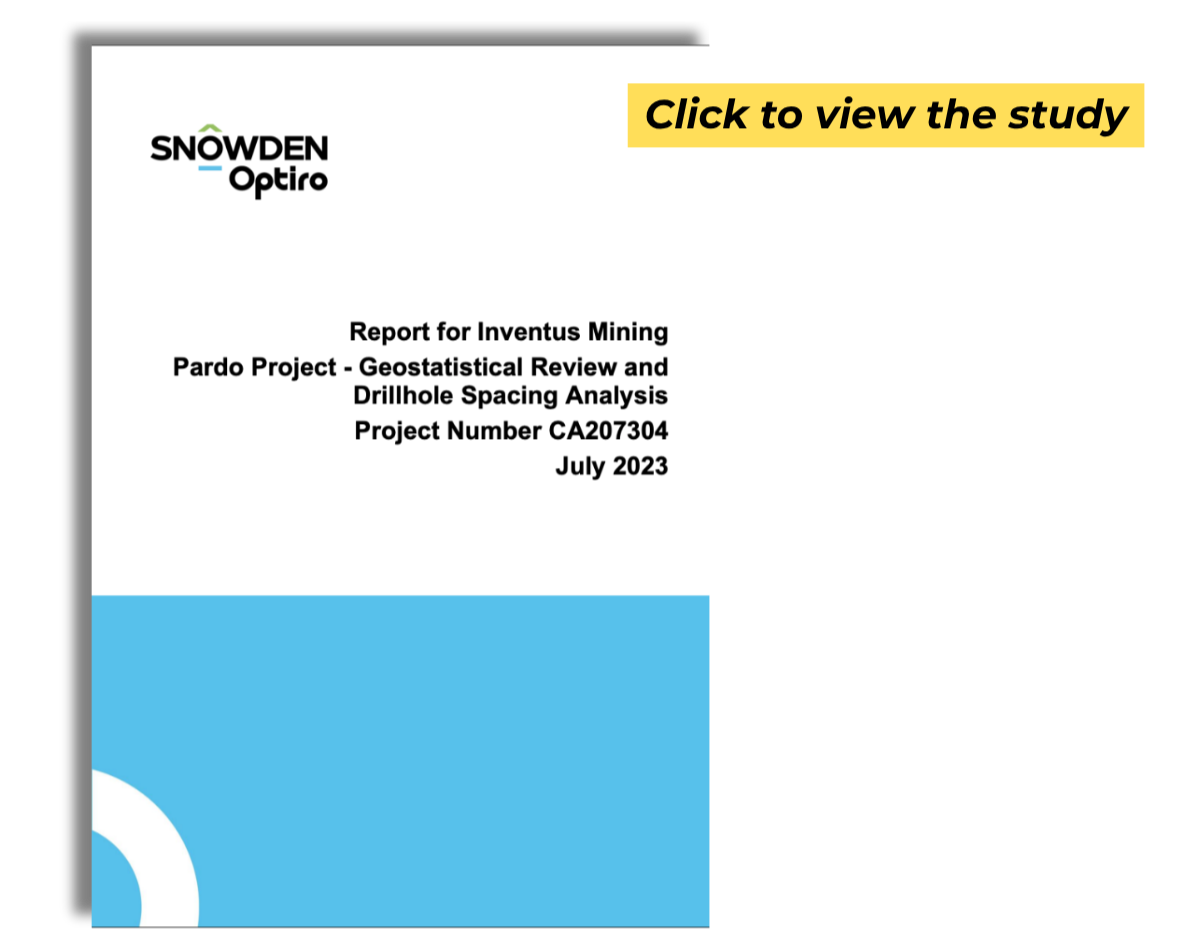
To better understand the characteristics at Pardo, Inventus commissioned an independent geostatistical study completed by Snowden Optiro in 2023.
The study examined the distribution of gold within the Pardo system and evaluated the sampling methods best suited to improving confidence in future resource estimation.
The study evaluated sampling variance, spatial continuity, and the impact of gold clustering on estimation confidence. Its conclusions supported the use of larger sample volumes, tighter drill spacing in key areas, and analytical approaches designed to improve sample representativity and reduce estimation uncertainty.
The goal was straightforward: collect data that more accurately reflects the deposit and reduce uncertainty wherever possible.
How Inventus Is Applying These Recommendations
The programs currently underway at Pardo are designed to do more than expand mineralization. They are also intended to strengthen confidence in the Company's understanding of the deposit for its upcoming resource estimate.
Large-Core Drilling
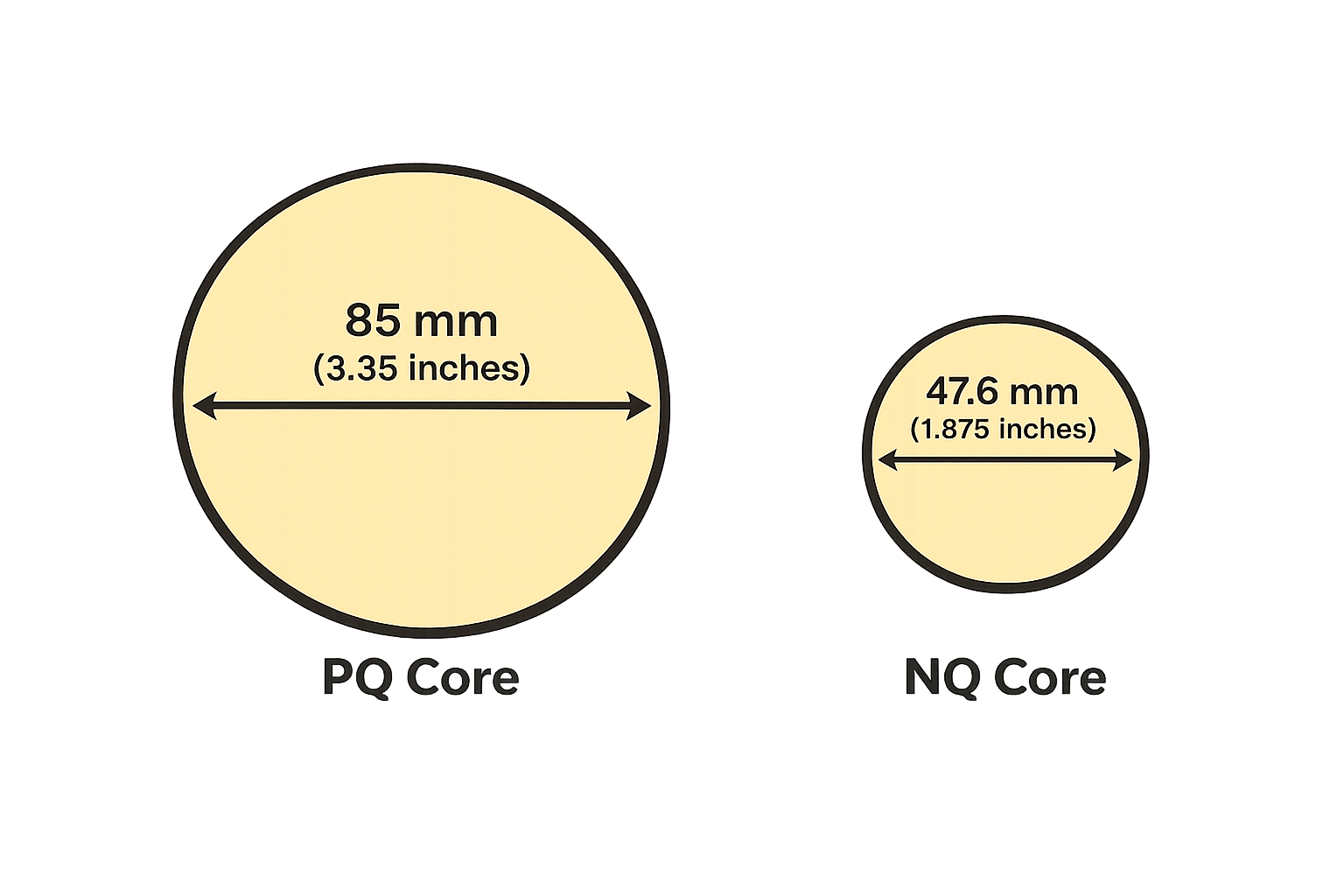
Large-core drilling (PQ) provides larger and more representative samples than conventional drilling methods (NQ).
By collecting more material from each interval, Inventus can better evaluate the distribution of gold within the reef horizons while reducing the influence of localized clustering.
Grade-Control Drilling
Grade-control drilling focuses on defining known mineralized areas in greater detail.
While exploration drilling asks, "How large could the system become?", grade-control drilling asks, "What do we have here?"
The recent grade-control drilling completed west of the Trench 1 bulk sample area helped confirm continuity of the shallow, flat-lying Main Layer while providing additional information regarding grade distribution and geological consistency.
Bulk Sampling
Bulk sampling provides one of the most representative tests of a mineralized system.
By processing larger volumes of material, Inventus can evaluate how the deposit behaves beyond individual drill holes and compare those results against expectations derived from drilling and geological modelling.
The ongoing processing of the remaining 7,500-tonne Trench 1 bulk sample represents another important step in strengthening confidence in the Company's understanding of the deposit.
From Drill Results to Resource Confidence
Resource estimates are not built solely from grade. They are built from grade, continuity, spacing, geological understanding, and confidence in the underlying data.
Two deposits with similar grades can produce very different resource outcomes if one dataset exhibits high variability and poor representativity while the other demonstrates strong continuity and confidence.
As a result, much of the technical work currently underway at Pardo is focused on reducing uncertainty and improving the quality of the information that will ultimately support the planned maiden resource estimate.
Inventus is targeting a maiden resource estimate for the Pardo Gold Project in Q4 2026.
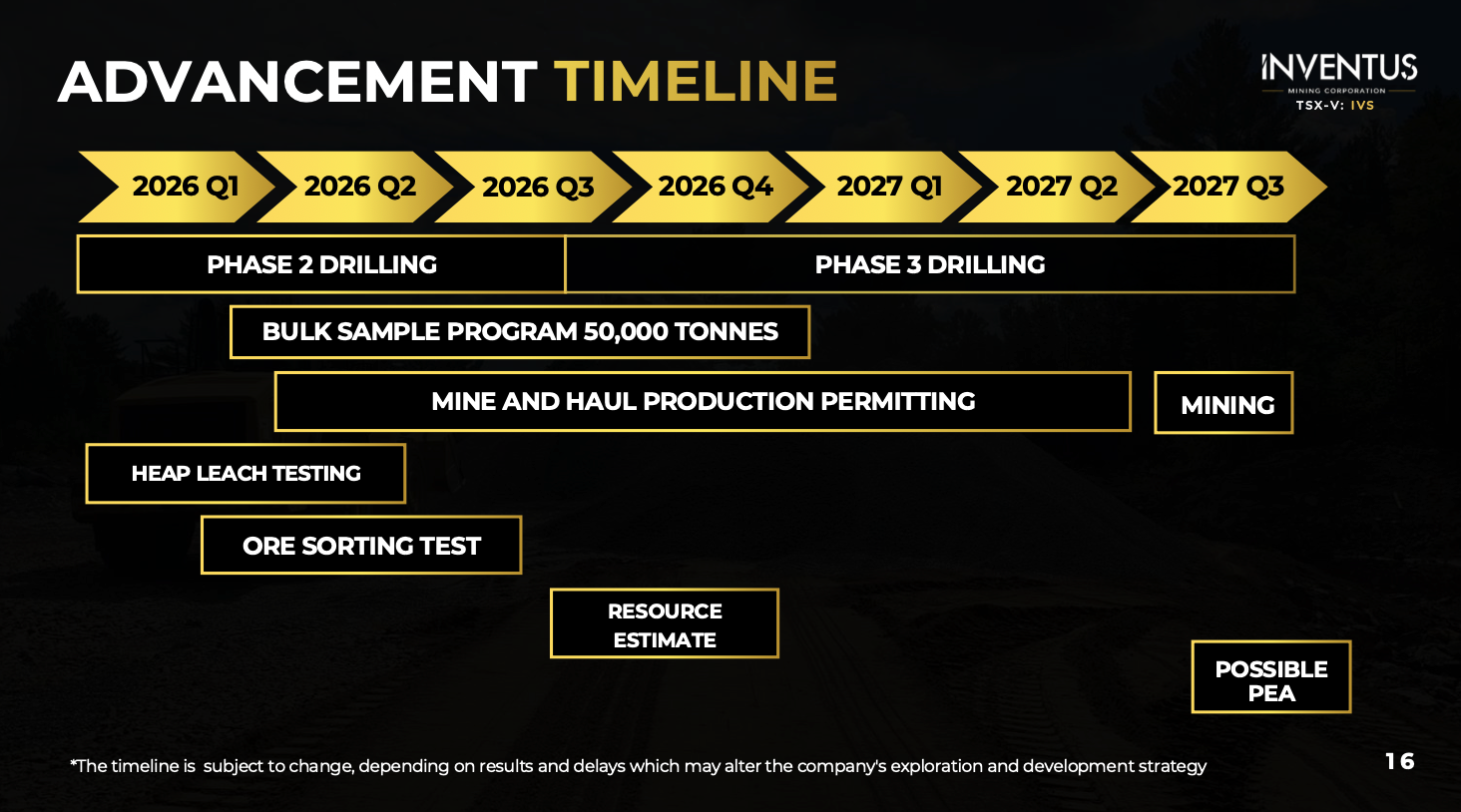
As that milestone approaches, confidence becomes increasingly important.
The objective is not simply to increase the volume of data collected, but to improve the representativity of that data. More representative samples can reduce estimation uncertainty and contribute to greater confidence in the geological and grade models used for resource estimation.
By combining exploration drilling, grade-control drilling, large-core drilling, and bulk sampling, Inventus is working to reduce uncertainty while building a stronger technical foundation for resource estimation.
Final Takeaway
Every drill hole adds information; every sample adds data – but the ultimate goal is confidence.
The work currently underway at Pardo is helping Inventus move beyond simply identifying mineralization and toward building a comprehensive understanding of the deposit. Through large-core drilling, grade-control drilling, bulk sampling, and continued exploration, the Company is working to reduce uncertainty and strengthen confidence ahead of its planned maiden resource estimate.
For investors, that confidence may ultimately be just as important as the grades themselves.
